Do Dolphins Give Gifts?

Ravish Kumar
| 15-05-2026
 · Animal Team
Imagine snorkeling off the coast of Australia when a male bottlenose dolphin swims up, drops a piece of seaweed at your feet, then stares at you like he's waiting for a thank-you note. It's awkward—but not random. In dolphin society, that seaweed might be a love letter.
Yes, male dolphins really do "gift" objects to females they're trying to impress. And no, it's not always pretty. Researchers have documented males offering everything from live eels to dead fish, sponges, and even discarded plastic (a sad sign of our times).
One study in Shark Bay recorded a young male carrying a large marine sponge for over 30 minutes before presenting it to a female—only for her to ignore him completely. Ouch.
Shocking truth: wild tricks animals use to manipulate you (and each other)
The strange reason these slow movers climb down once a week—despite deadly odds.
Discover how pets naturally ease tension and lift your mood every day.
How having a furry friend can lift spirits and ease depression
The simple routine that keeps your home fresh and your cat happy
Ever Wonder Why Squirrels Have Such Huge Tails? Discover the Surprising Ways Their Fluffy Tails Help Them Survive Every Day!
It's not "romance"—it's strategy
Don't imagine candlelit dinners underwater. Dolphin courtship is less about feelings and more about signaling fitness. By carrying an object—especially one that's hard to handle or risky to obtain—a male shows he's strong, coordinated, and has spare energy to waste on showy behavior. Think of it like a peacock's tail, but with more seaweed.
These displays often happen in groups. Male bottlenose dolphins form tight alliances—sometimes pairs, sometimes trios—that work together to herd a female and keep rivals away. Within these teams, gift-giving can also be a way to strengthen bonds or establish hierarchy. One male might "share" a fish with his ally before turning to the female, almost like rehearsing teamwork.
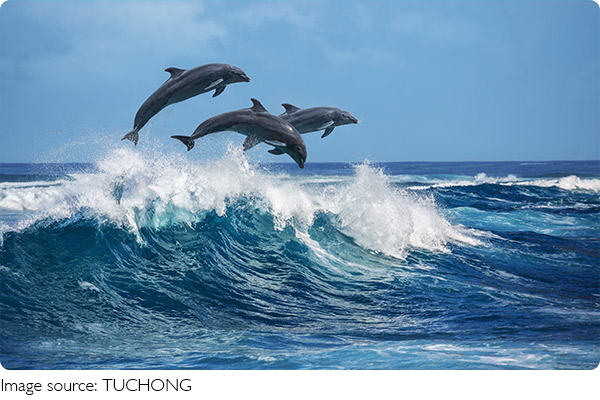
Dolphins live in layered social worlds
What makes this behavior so striking is the context. Bottlenose dolphins have one of the most complex social structures outside of primates. They recognize themselves in mirrors, remember old friends after decades apart, and even develop signature whistles—basically, names.
In Shark Bay, researchers have tracked individuals for over 40 years. They've seen males form lifelong partnerships, cooperate across generations, and even "adopt" orphaned calves. Within this web, courtship isn't a one-off performance. It's part of a long game that includes alliance-building, reputation management, and social timing. A poorly timed gift might not just get rejected—it could damage a male's standing in the group.
And it's not just males. Females are highly selective. They often resist advances, swim away, or even team up with other females to avoid unwanted attention. Their choice matters—because raising a calf takes years of investment, and they can't afford to pick a flaky partner.
Our idea of "romance" doesn't fit them
We love to project human emotions onto animals. A dolphin offering seaweed? "Aww, he's in love!" But in reality, there's no evidence dolphins feel "love" the way we do. Their behavior is driven by instinct, social learning, and evolutionary payoff—not poetry.
That dead fish isn't a symbol of devotion. It's a signal: "I can hunt. I'm alert. I've got resources." If the female accepts it—or at least tolerates the male hanging around—it might lead to mating. If not, he'll try again with a different object, or a different female.
This mismatch between human interpretation and animal reality is everywhere. We call birds "singing for joy," when they're actually defending territory. We say dogs "feel guilty," when they're just reacting to our tone. With dolphins, the danger is even greater because they seem so human-like—their eyes, their smiles, their playful leaps. But their inner world runs on different rules.
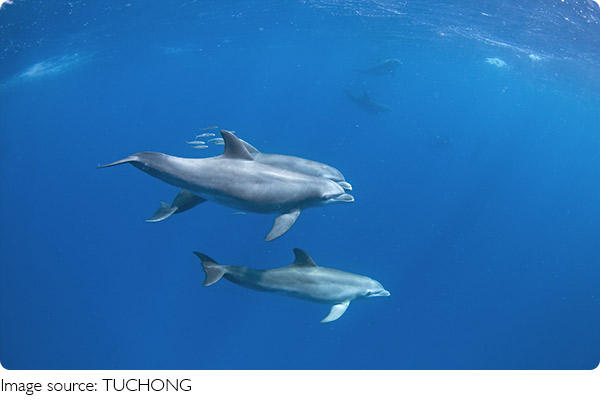
So next time you hear about a dolphin "giving a gift," don't reach for the violin music. Think of it as a job interview… with seaweed.
And maybe that's the real lesson: nature doesn't need our version of romance to create deep, lasting, and astonishingly clever social lives. It's got its own language—one that speaks in sponges, whistles, and silent, strategic choices beneath the waves. Isn't it more fascinating that way?