Hidden Nut Map!

Chandan Singh
| 10-06-2026
 · Animal Team
Welcome, Friends! Have you ever spotted a squirrel hurriedly digging a small hole, placing a nut inside, and covering it with leaves?
It might seem like a random little ritual, but there's much more happening than meets the eye. This clever behavior is part of a survival strategy that helps squirrels prepare for times when food is scarce.
Passed down through countless generations, this instinct has played an important role in helping these energetic animals thrive in the wild.
Squirrels are among the most resourceful mammals in the wild. Their ability to collect, hide, and relocate food has helped them thrive across forests, parks, and even busy cities. More interestingly, this behavior does not just benefit squirrels—it quietly helps shape entire ecosystems.
A giant neck wasn't an accident! Here's what shaped it.
Massive horns, expert climbing skills, and survival in extreme mountain environments
Tiny jungle acrobats or secret masterminds? The answer may surprise you!
Rare genes or hidden risk? The truth may surprise you!
They live underground—but their social lives might surprise you!
Is a natural compass helping foxes hunt? Scientists uncovered a remarkable clue!
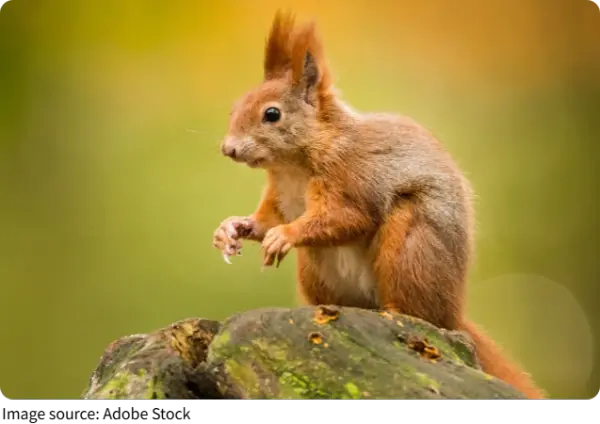
A Natural Pantry for the Cold Season
The primary reason squirrels bury nuts is to create food reserves for times when fresh supplies become difficult to find. During late summer and autumn, many tree species produce large amounts of acorns, walnuts, hazelnuts, and other seeds. Instead of eating everything immediately, squirrels store much of this bounty for the future.
Scientists call this behavior "scatter hoarding" or "scatter caching." Rather than placing all their food in one location, squirrels distribute hundreds or even thousands of small caches across a wide area. Each hiding place may contain only one or a few nuts. This scattered approach offers an important advantage.
If another animal discovers one cache, only a tiny portion of the squirrel's food supply is lost. It is essentially nature's version of not putting all your eggs in one basket. Species such as the eastern gray squirrel and fox squirrel are particularly well known for this strategy. Research has shown that an individual squirrel can create several thousand separate hiding spots during a single autumn season.
How Can They Remember So Many Hiding Places?
At first glance, it seems impossible that a small animal could remember the locations of hundreds of buried nuts. Surprisingly, squirrels possess highly developed spatial memory. Instead of memorizing every cache like a list, they build a mental map of their surroundings. Large trees, rocks, fallen logs, pathways, and even the angle of branches can serve as reference points.
These landmarks help them navigate back to hidden food months after it was buried. Their sense of smell also plays a major role. Even under a layer of leaves or a light blanket of snow, squirrels can often detect the scent of buried nuts. This combination of memory and smell makes them remarkably efficient foragers.
Scientists have also observed that squirrels organize their caches by food type. Acorns might be buried in one area, while walnuts are stored elsewhere. This form of categorization, sometimes called "chunking," reduces the mental effort needed to relocate supplies later.
Outsmarting Hungry Rivals
Life in the forest is competitive, and squirrels are not the only animals searching for easy meals. Birds, mice, chipmunks, and even other squirrels constantly look for hidden food stores. To protect their precious stash, squirrels have developed some surprisingly clever tactics. Researchers have documented squirrels pretending to bury food when they realize another animal is watching.
They dig a hole, act as though they are placing a nut inside, cover it up, and then quietly carry the real prize elsewhere. This deceptive behavior helps reduce theft and shows a level of problem-solving that many people do not expect from such a small mammal. Some squirrels also spend extra time covering their caches with leaves, soil, or loose debris, making them even harder for competitors to locate.
The Forgotten Nuts That Grow Into Forests
No matter how impressive their memory may be, squirrels do not recover every nut they bury. A portion of these forgotten seeds remains in the ground, where conditions may be perfect for germination. As a result, squirrels unintentionally act as forest gardeners. Oak, hickory, walnut, and hazelnut trees often benefit from this accidental planting service.
By transporting seeds away from the parent tree, squirrels also reduce competition between young seedlings and mature trees. Ecologists consider this relationship an important part of many woodland ecosystems. In some regions, the spread of certain tree species depends heavily on animals that store and forget seeds. Without realizing it, squirrels help renew forests one buried nut at a time.
Not Every Buried Treasure Is a Nut
Although nuts are the most familiar item in a squirrel's diet, they are far from the only food they store. Depending on the season and local habitat, squirrels may cache seeds, pine cones, fungi, berries, and even pieces of fruit.
Their diet changes throughout the year, allowing them to adapt to different environments. Urban squirrels, for example, often take advantage of ornamental trees planted in parks and gardens, while forest-dwelling species rely more heavily on native plants. This flexibility is one reason squirrels have successfully expanded into cities around the world.
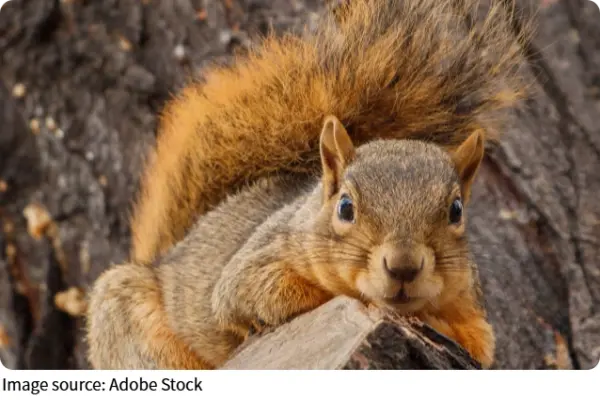
The next time you see a squirrel busily digging in the grass, remember that you are witnessing far more than a quirky habit. That little animal is planning for the future, protecting its food from thieves, and possibly planting the next generation of trees at the same time.